



As Tensions Rise in the East, Europe’s Militaries Shop For Heavier Weapons
At London’s giant DSEI arms show, the talk is of Russia, ISIS, and hybrid war.

LONDON — Russia’s invasion of Crimea and its aggressive stances along Europe’s eastern borders have NATO militaries racing to rebuild their combined-arms skills — and Western defense companies revamping their product lines to suit.
The return of what one European business executive called “more traditional threats” was reflected at Defence Security Exposition International, better known as DSEI, where armor and air-defense batteries are shouldering aside the lighter, less expensive gear of counterinsurgency. Much has changed in the two years since a thousand-plus weapons manufacturers last gathered at this massive arms bazaar in southeast London.
“Defense was then in a different place, preparing for the drawdown from Afghanistan, readying itself to face new threats in our new age of contingency,” British Defence Secretary Michael Fallon told an audience at DSEI. “It turns out we didn’t have to wait too long.”
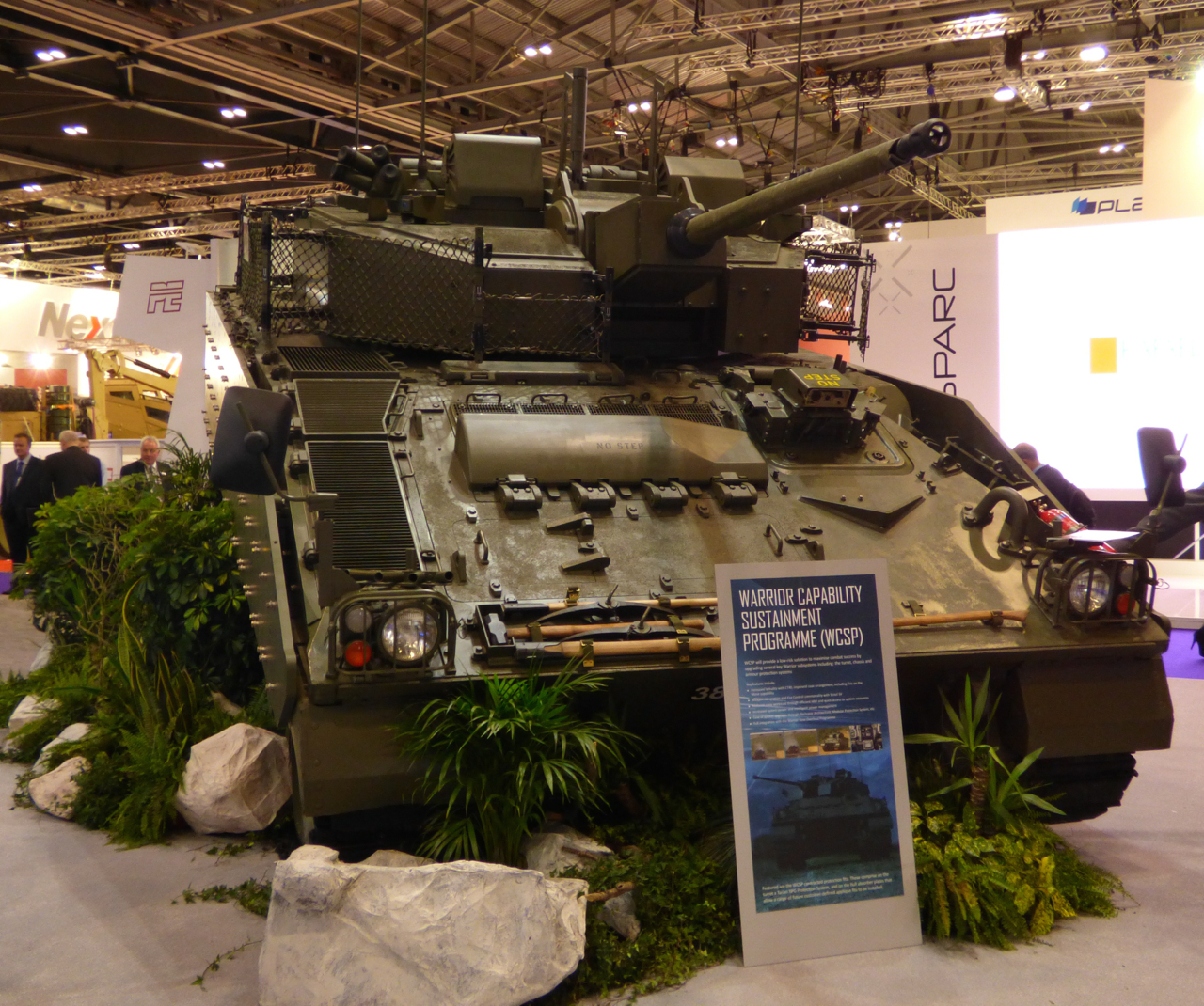
The show’s two sprawling halls were packed with tanks, armored vehicles, long-range cruise missiles, drones of all sizes, high-tech electronics, and other equipment. Behind the massive building, a handful of warships from the Royal Navy, Canada, Germany, and India tied up at the Royal Victoria Dock off the Thames River. Sailors of many lands welcomed visitors aboard to show off cutting-edge equipment.
The booths and displays still proffered a hefty measure of weapons built for counterinsurgency – armored trucks, machine guns and IED jammers — but less than at the peak of the Afghanistan and Iraq wars, attendees said. NATO military leaders believe this type of equipment will still be needed for the wars ahead, which are expected to feature a hybrid mix of traditional fighting and militant insurgency.
Much of the discussion at DSEI focused on three security crises: the fighting in eastern Ukraine, the Western air campaign against the Islamic State, and the millions of Syrians seeking refuge in Europe.
“These threats to our security and our prosperity underline the need, not just for strong armed forces, but for the best capability,” Fallon said.
Tank Threat Returns
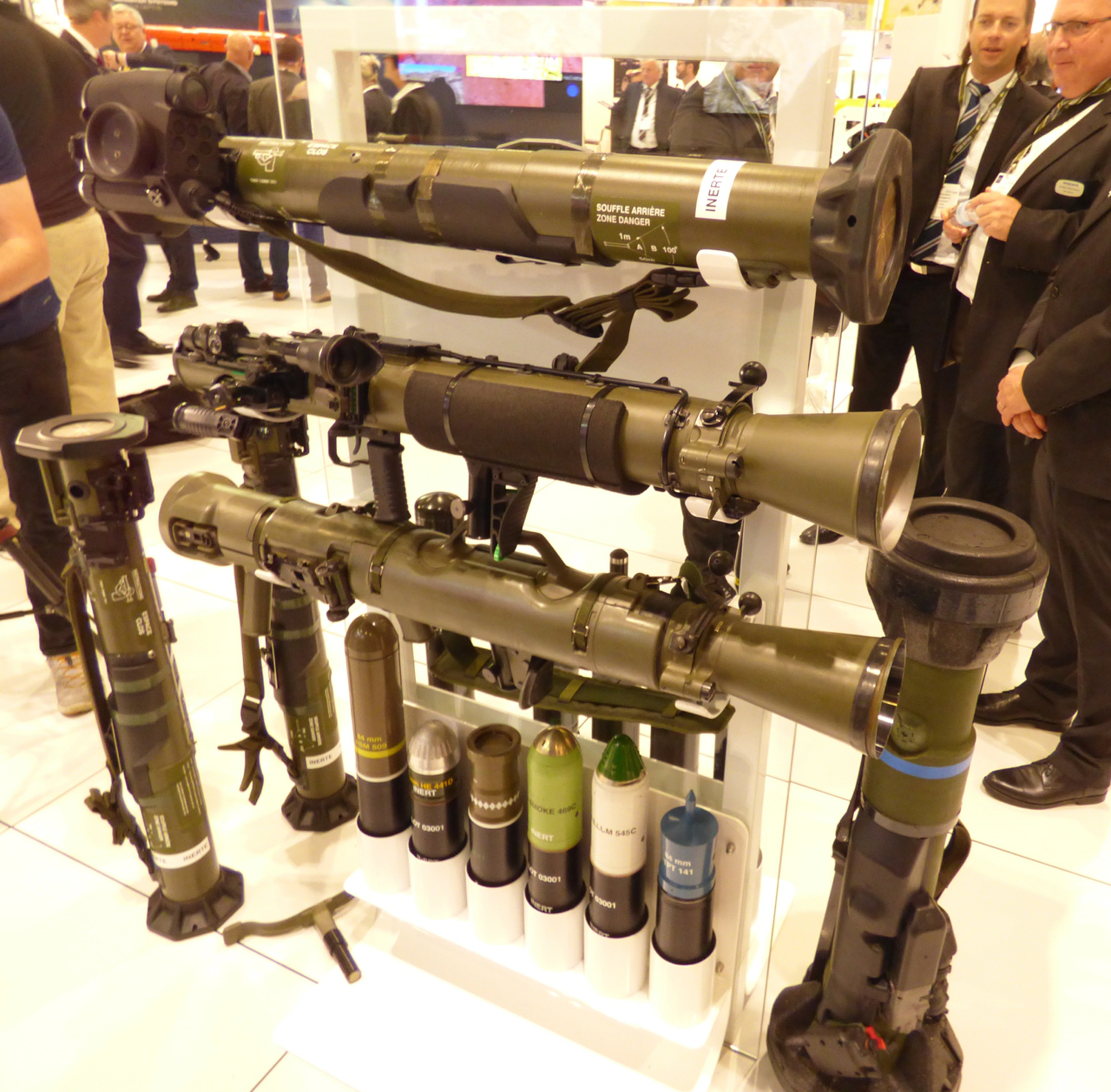
Over at the Saab booth, Claes-Peter Cederlof touted shoulder-fired rockets that the company says can destroy all types of tanks.
A Swedish Army officer for 18 years before joining Saab, Cederlof was marking his tenth visit to the biannual defense convention. In the past, he said, the show had focused more on training, and ways Europe’s militaries could better fight alongside with one another. But 2016 had a Cold War-like feel about it, he said, with a heavy focus again on defending against Russian formations.
“The tank threat is … much, much more closer to you today because [Russian President Vladimir] Putin is doing something” in eastern Ukraine, he said.
Then there’s the aerial threat. Russia occasionally flies its fighter and bomber aircraft near NATO’s borders, with no notice. Alliance countries have taken to flying patrols of their own; the Royal Air Force has Typhoon and Tornado fighter jets in the Baltic skies.
At DSEI, Fallon announced that his Defence Ministry had inked a $450 million deal with MBDA to buy short-range, heat-seeking missiles, the kind a fighter jet would use to shoot down another plane.
“Those fighters must be armed with the finest missiles,” Fallon said.
European countries are also interested in long-range weapons that can fly deep into enemy territory. That, too, reflects a shift from operations in Afghanistan and Iraq, where the lack of enemy air defenses allowed the use of simpler gravity bombs.
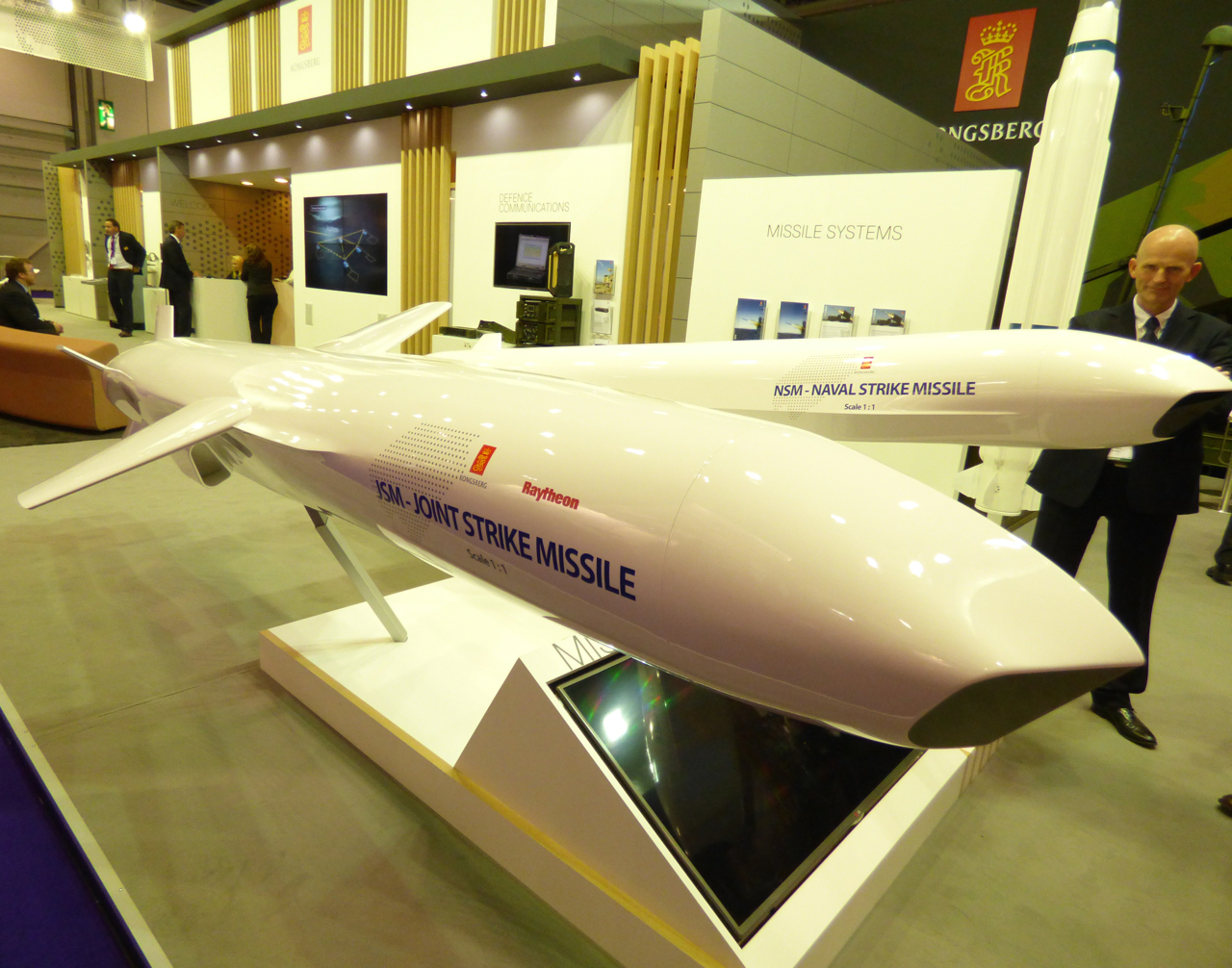
At its own booth, Norwegian arms maker Kongsberg displayed a full-scale model of its Naval Strike Missile, a low-flying cruise missile designed to sink ships. Poland, next door to Russia’s Kaliningrad, is buying this missile for coastal defense, said Kongsberg executive Pål Bratile.
Poland, which has stepped up its defense spending in light of Russia’s activity, also announced at DSEI that it would buy stealthy JASSM long-range cruise missiles from Lockheed Martin to arm its American-made F-16 fighter jets.
Drones and Training
Ten years ago, security officials worried about terrorist attacks involving large airplanes, Saab’s Cederlof said. Now they believe it is only a matter of time before a drone is used nefariously. Even one of the smaller drone — which in recent years have become ever cheaper, more capable, easier to operate — could do serious damage.
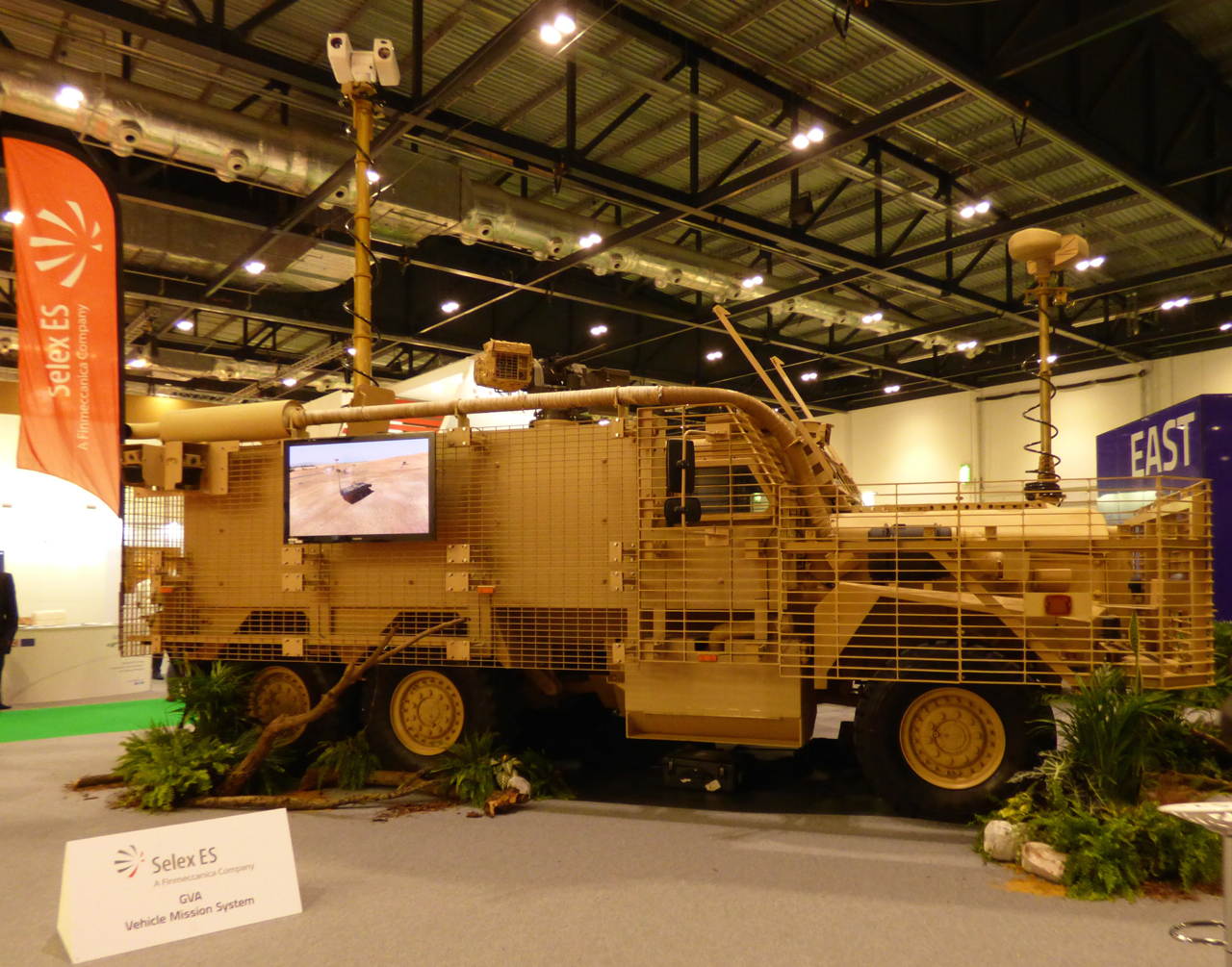
So defense companies are working to develop products that help militaries fend off attacks by drones. Italy’s Selex ES, part of Italy’s behemoth Finmeccanica, is spending its own money to build Falcon Shield, a set of sensors and counter-electronics meant to disable small drones.
“In terms of who the treat is, it varies all the way from lone wolves and activists to terrorist organizations and thieves,” said Steve Williams, capability manager for the Falcon Shield.
Along with the real arms, the show floor featured virtual training systems that connect troops in the simulators with others arrayed on real practice ranges. DSEI attendees said the fears of Russia coming west have spurred a renewed emphasis on helping land, naval, and ground forces train together — rather than individually, as had become the general habit.
“You need to train [forces] in a very proper way,” Cederlof said. “We know one thing for sure, … they are not so well-prepared for the action when it actually comes.”
U.S. Army brass has recognized these shortfalls and is planning to send soldiers for high-end training at live practice range in California more often. NATO too is planning more intense and complex drills next month.
“It’s not just the U.S. Everyone is talking full-spectrum” war, Cederlof said.