

sponsor content What's this?
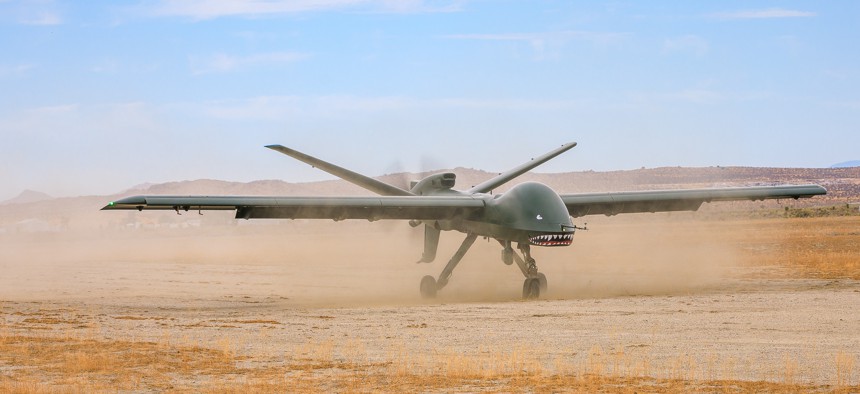
GA-ASI’s Mojave STOL supports airfields without airports, allowing soldiers to find, track, and eliminate adversaries using improvised launch and recovery sites.



GA-ASI’s Gray Eagle® 25M and Mojave STOL UAS are ready today for the Army’s future fight
GA-ASI demonstrates at AUSA how its combat-proven platforms provide the U.S. Army with affordable, precise mass and expeditionary agility needed for the future fight.
Presented by
General Atomics Aeronautical Systems, Inc.

Presented by
General Atomics Aeronautical Systems, Inc.
Extended global conflict has depleted the munitions stockpile. While traditional effectors remain essential to domain dominance, long production timelines and mineral shortages complicate rapid fielding. To close this gap, industry leader General Atomics Aeronautical Systems, Inc. (GA-ASI) is building new unmanned platforms that prioritize rapid production, affordability and powerful long-range kinetic and non-kinetic capabilities without dependence on limited resources.
At AUSA 2026, GA-ASI will demonstrate how their Mojave Short Takeoff and Landing (STOL) and Gray Eagle® 25M (GE-25M) platforms are built to adapt and address future threats, helping the U.S. Army effectively fight and win at the mission’s edge for many years to come.
“The Mojave STOL and the GE-25M platforms were built for high-end warfare as well as any counter-terrorism operations the U.S. Army may take on, covering the entire range of conflict,” explained one GA-ASI spokesperson. “They were specifically designed around these modular, open architectures and built to survive in today’s combat environment as well as tomorrow’s fight.”
Countering economic asymmetry through affordable mass
One Patriot PAC-3 Missile System Enhancement (MSE) costs approximately $3.72 million per unit. And while the Patriot is effective, it is not the best solution for countering an incoming barrage of drones cost-effectively. Addressing this cost asymmetry is central to both the Mojave STOL and the GE-25M systems; both are designed to provide the U.S. Army enhanced force projection and stop threats well before costly and vulnerable Patriot batteries become necessary.
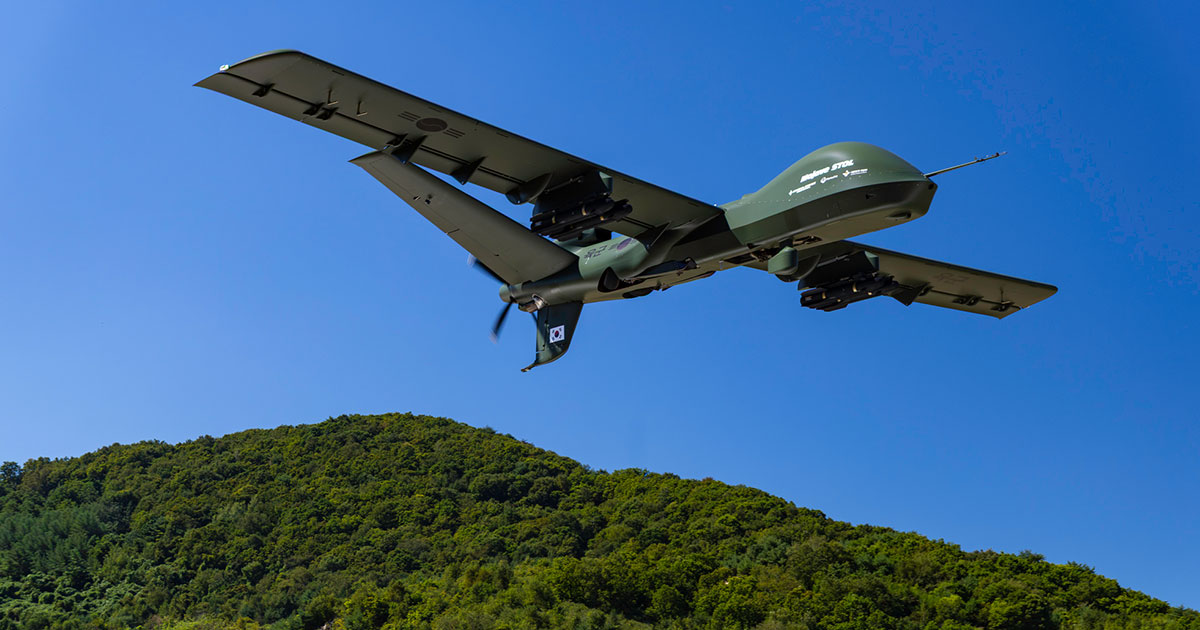
“Mojave STOL is ideal for expeditionary missions in remote or contested areas where traditional runways are unavailable. It can operate from smaller ships, roadways, and rugged surfaces, which makes it particularly valuable when it comes to naval or special operations where high-end effects and persistent surveillance are needed,” the spokesperson said.
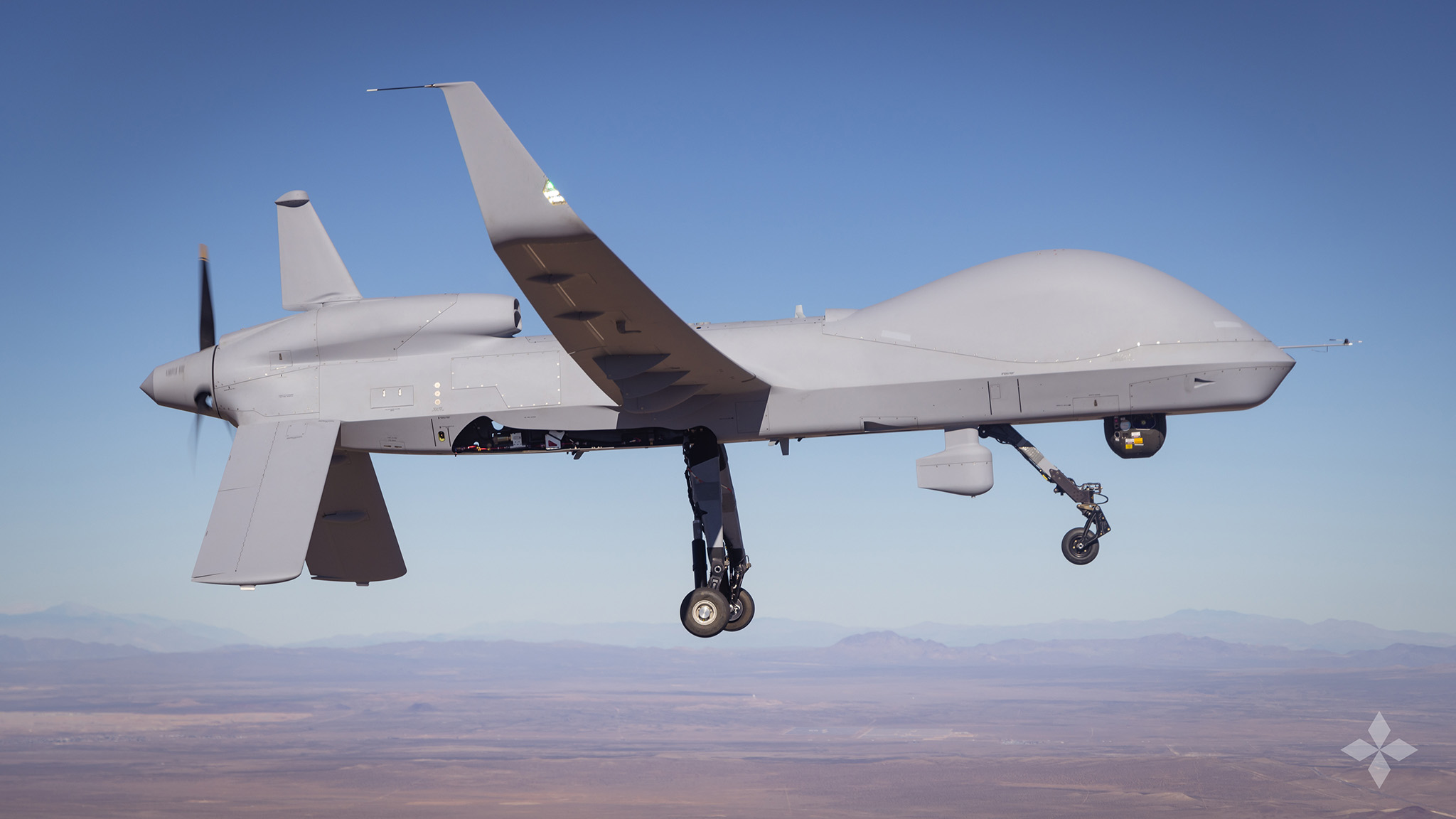
Conversely, the Gray Eagle 25M is built to excel across multi-domain operations, offering capabilities such as real-time threat detection, identification and targeting. GE-25M is best suited for missions requiring persistent reconnaissance, surveillance, targeting and acquisition, as well as operations in contested locales where survivability, advanced long-range sensors, and air-launched effects remain critical to engaging threats while allowing the GE-25M to remain outside the Weapons Effects Zone (WEZ).
Both Mojave STOL and GA-ASI’s GE-25M are built around the central premise of delivering reliable systems engineered to outslug high-tech, exquisite designs like modern electric and vertical-lift concepts. While newer technologies promise tactical flexibility, their high unit costs, technical immaturity, mechanical complexity, and heavy maintenance burden make for a poor option in today’s rugged expeditionary environments.
“What history teaches us is that true tactical resilience belongs to the mechanically simple workhorses that can land on a muddy jungle strip, take on more fuel and munitions in an austere location, then take off again and get back into the fight,” the spokesperson explained. These aerial workhorses can also resupply the most forward fighting units with critical supplies in bulk where the main supply route is over water and too far for manned helicopters to transit.
EagleEye® and MOSA architectures
Alongside its advanced expeditionary platforms, GA-ASI has heavily invested in developing modular, open systems built for the edge. The Gray Eagle 25M is the pinnacle of this effort, with the ground-control system and the air platform’s Modular Open Systems Approach (MOSA) architecture supporting rapid configuration changes without extensive retooling or integration costs.
GE-25M’s architecture also means that in the future, this platform can be easily upgraded to support enhanced anti-jam and electronic protection measures as the threat evolves. Also, by integrating advanced radar and sensor technologies like the EagleEye® radar with Active Electronically Scanned Array (AESA) capabilities, the Gray Eagle 25M remains relevant, enhances mission assurance and survivability, and is effective in high-threat environments.
Similarly, GA-ASI’s revolutionary Ground Control System – Expeditionary (GCS-E) uses Army-owned software, ruggedized hardware and is MOSA-compliant. Its open systems architecture enables rapid integration of new systems, procedures, and automation and its portable design significantly reduces logistical burden – from personnel, sustainment, and vehicles to communications – supporting the Army’s goal to “unman unmanned.”
The spokesperson added, “Gray Eagle 25M is a heavily modernized version of the MQ-1C Gray Eagle, with significant advancements in avionics, processing power and survivability. It’s designed for long-endurance missions and incorporates cutting-edge features such as the MOSA architecture, the HFE 2.0 engine and the EagleEye multi-mode radar, which provides five times the range of legacy systems, and adds both maritime and air-to-air modes.”
Whether you’re interested in learning more about Gray Eagle’s MOSA architecture or the Mojave STOL’s runway-independent operations, GA-ASI stands ready to meet the U.S. Army’s need for cost-effective, scalable solutions.
This content is made possible by our sponsor General Atomics Aeronautical Systems, Inc.; it is not written by and does not necessarily reflect the views of Defense One's editorial staff.
NEXT STORY: The next big wave of autonomous jets is rolling out around the globe