

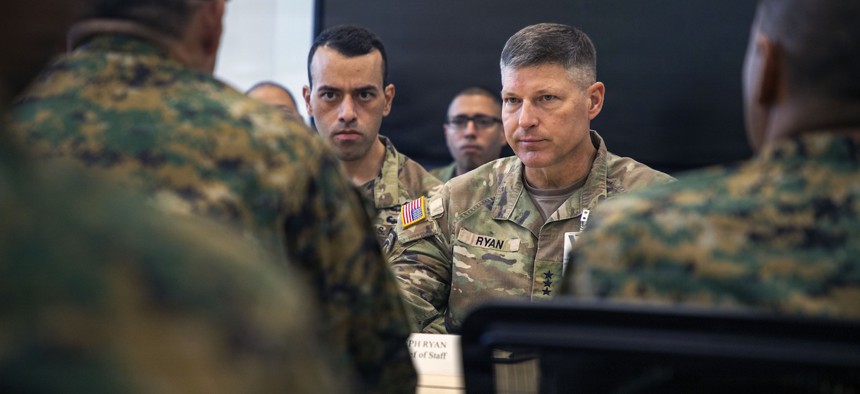
Gen. Joe Ryan attends a meeting in Panama in 2025. U.S. Army / Sgt. 1st Class Rakeem Carter

US Army to stage counter-drug training exercises in South America
Western Hemisphere Command is building up a “theater Army,” Gen. Joe Ryan said Monday at AUSA.

The Army is looking to refocus its U.S. Southern Command exercises to focus on counter-cartel operations, Gen. Joe Ryan, who heads Army Western Hemisphere Command, said Monday at the Association of the United States Army annual meeting in Washington, D.C.
The move is part of the nascent command’s mission to build a “theater Army,” Ryan said, above and beyond the largely partner training and disaster response missions its U.S. Army North and South predecessors maintained.
“Future multinational training events will shift away from strictly relationship-building engagements toward operations directly targeting drug cartels and designated terrorist organizations,” he said.
Ryan said the review was directed by SOUTHCOM’s commander, Marine Gen. Frank Donovan, “to better align with current federal priorities and strategy.”
Those priorities include the latest National Defense Strategy’s shift that puts defending the homeland at the top of the list, with the Western Hemisphere as the Pentagon’s priority theater, a concept dubbed the “Donroe Doctrine.”
That focus on SOUTHCOM gave rise to the administration’s strikes on suspected drug trafficking boats in the Caribbean and the raid to capture Venezuelan President Nicolas Maduro.
“Make no mistake, these designated terrorist organizations operate as global financial networks, utilizing a resilient business model built to endure over decades unless targeted interventions actively disrupt their economic base,” Ryan said.
At the same time, the Army is also beefing up its ability to do the legacy mission of crisis response in SOUTHCOM, Ryan said. The service recently got approval to move more aviation assets and personnel down south, to help move people and supplies.
“We're going to grow that footprint down there, where it's really, you know, it's a relatively modest footprint to date, given the responsibilities it's attended to, and we're gonna give them more aircraft, more crews, more maintainers here over the next couple of fiscal years to help them address some of the natural disasters and threats in the region,” he said.
Help us report on the future of national security. Contact Meghann Myers: mmyers@defenseone.com, meghannmyers.55 on Signal.
NEXT STORY: Army activates sustainment brigade as part of Pacific restructuring