

sponsor content What's this?
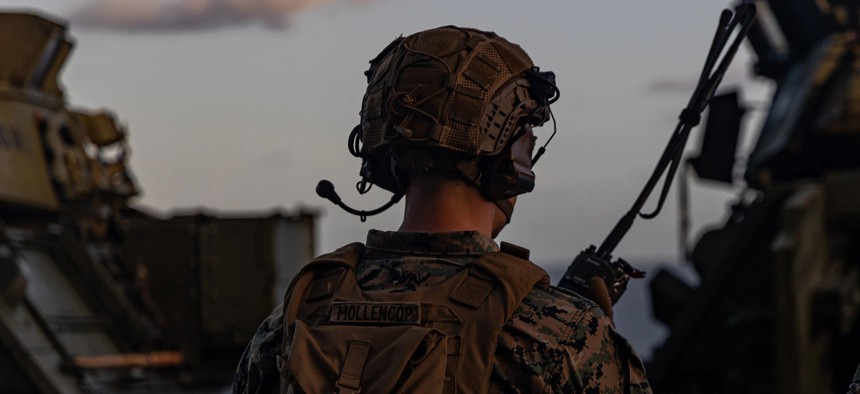



U.S. Special Operations Forces, or SOF, are elite military units specially trained, equipped and organized to conduct high‑risk, complex and sensitive missions. Strength and conditioning have long been viewed as the foundation of SOF readiness. As the military evolves toward a more holistic training approach, however, SOF fitness is now understood as just one of the measurements of overall human performance.
Cognitive sustainment, stress management and social and emotional wellness are now recognized as equally critical pillars to mission success. These domains enhance SOF operators’ decision‑making under pressure, improving mental resilience and team cohesion. When these domains are prioritized and synchronized, SOF operators achieve enhanced readiness, leading to greater resilience, lethality, adaptability and agility across all missions.
“Human performance is the measurable capacity of a servicemember to execute the mission tasks safely and effectively … over their entire career,” said Tyler Christiansen, human performance advisor at General Dynamics Information Technology (GDIT). “It’s looking at the whole person and how we can best maintain them or equip them with the proper attributes to be successful and have career longevity.”
Foundations of human performance
Just over 15 years ago, the United States Special Operations Command (USSOCOM) initiated its Preservation of the Force and Family (POTFF) program, laying the foundation for optimizing human performance through five domain priorities: physical, psychological, cognitive, social and family, and spiritual.
With POTFF, said retired General Richard Clarke, former USSOCOM commander, “we are staying true to our first SOF truth — ‘humans are more important than hardware’ — by investing in our people, ensuring a trusted, capable, diverse and committed force that is ready to meet any challenge.”
The word “hardware” applies in two different ways: the weapons systems, vehicles and more that warfighters use to complete their missions but also the “hardware” of their own bodies. SOF personnel are more than their physical selves, and maintenance and care need to reflect that.
“Strength alone does not protect against cognitive fatigue from sleep deprivation, cumulative blast exposure, chronic stress and burnout, or family instability that degrades focus,” Christiansen said.
The realities of modern warfare further underscore the criticality of advancing human performance. In the foreword of a white paper Christiansen recently coauthored, Admiral Frank M. Bradley, commander of USSOCOM, wrote, “Today’s battlespace is multidomain, fast-paced and cognitively demanding. Warfighters must operate across cyber, space, urban and irregular environments with precision and adaptability. This evolution has driven a transformation in human performance programming.”
A research- and data-driven approach to performance
Building on more than four decades of SOF research and support, and with veterans comprising 30% of its workforce, GDIT has the domain expertise to help SOF enhance readiness across all five POTFF domains and navigate the complexities of modern military conflict and the human brain.
“You wouldn't expect a performer to go out and perform well when their body isn’t rested, recovered, fed and hydrated,” said Tyler Klien, senior mental performance coach at the Toronto Blue Jays. “The same goes for the brain. When we talk about cognitive processes such as decision-making, alertness, reaction time and memory, research indicates cognitive processing detriments even with acute sleep of under 7 hours.”
A holistic, integrated approach to wellness is still measurable and data driven. Through partnering with the Defense Health Agency (DHA), for example, GDIT human performance experts have leveraged cutting-edge technologies like the Computer Assisted Research Environment (CAREN) to better understand the impacts of brain injuries. CAREN helps track metrics such as eye movement, cognitive load, electrical activity in the brain, footfall data, sleep metrics and more to assess injury recovery and readiness to return to duty.
“For optimal performance mentally and physically, recovery for the autonomic nervous system (ANS) is really important,” said Klien “Without dedicated recovery we see reduced stress tolerance, sleep disturbance, energy reduction, irritability and motivation decline among other things.”
And without intervention, these negative impacts can continue long-term. But with proper support and training, tactical operators can learn to identify when their own ANS is in need of recovery as well as specific, repeatable strategies to aid in recovery.
“To retain readiness in the moment, there are breathing protocols such as coherent breathing that work toward balancing sympathetic and parasympathetic activation,” said Klien. “Longer-term interventions include mindfulness training and sleep hygiene protocols to maximize recovery even if sleep is reduced.”
Just like physical performance, cognitive performance depends on proper hydration, nutrition and sleep and can be improved by exercise. Moreover, when cognitive, social and emotional needs are prioritized and warfighters are supported beyond their physical bodies, the entire SOF enterprise benefits.
Learn more about how GDIT is supporting SOF in enhancing human performance.
This content is made possible by our sponsor GDIT; it is not written by and does not necessarily reflect the views of Defense One's editorial staff.
NEXT STORY: AI and Influence: The New ‘Arms Race’