

sponsor content What's this?


A production powerhouse for US Navy radars
Raytheon’s Radar Development Facility: Delivering fast, smart and at scale
Presented by
RTX

Presented by
RTX
At one end of Raytheon’s sprawling campus in Andover, Massachusetts, in a foundry that makes a military-grade version of a powerful semiconductor, a tiny computer chip comes into being.
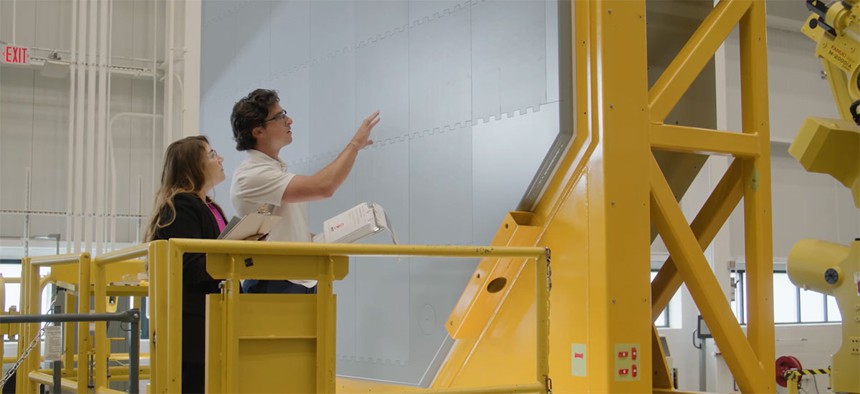
Just down the road, in a testing chamber with high ceilings and blue acoustic foam lining the walls, another chip just like it – nested inside a circuit card, then a larger assembly and ultimately a fully built naval radar – has a surge of power sent through it. A robot tests, torques and calibrates every part to make sure it’s ready to hit the high seas.
From there, it’s ready to ship out.
That end-to-end activity is the hallmark of what Raytheon calls its “vertically integrated” Radar Development Facility – and the very reason that the business, now several years into the design and manufacture of the U.S. Navy’s SPY-6 radar, is confident it can continue to produce that system on time, at scale and at reasonable cost.
“From chip to ship, every stage of production happens in parallel,” said Jason Rathbone, executive director of Naval Radars at Raytheon, an RTX business.
Read the full article at RTX.com.
This content is made possible by our sponsor RTX; it is not written by and does not necessarily reflect the views of Defense One's editorial staff.
NEXT STORY: Securing the final frontier.